It is Monday morning, and your product roadmap has already changed. A customer needs an integration early, the release is slipping, and your backend team is buried.
Now what? Delay the launch? Overload the team? Start a three-month local search?
There is another option: build an engineering organization that moves when the business moves. The right remote developer can add missing skills, increase capacity, and create the team flexibility to respond without turning every change into a fire drill.
Remote work is no longer fringe.June 2026 data from the U.S. Bureau of Labor Statistics shows that 21.7% of people at work teleworked for at least part of the week; among workers with a bachelor’s degree or higher, the figure was 38.5%.
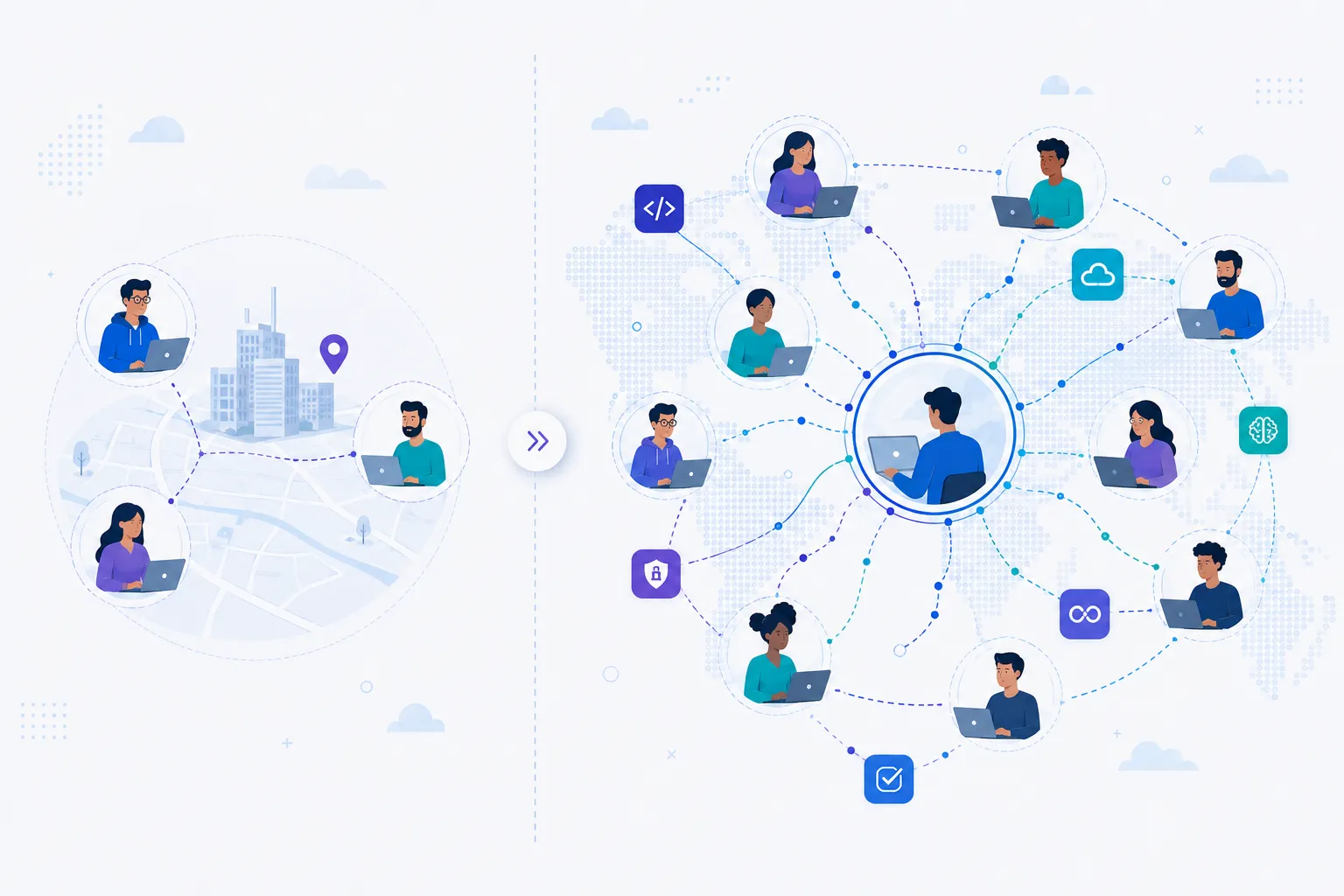
Your Office Isn’t the Bottleneck—Your Talent Radius Is
Traditional hiring starts with location: Who lives nearby? Who will relocate?
Flexible hiring starts with a better question: Who can solve the problem?
For a growing technology company, team flexibility means being able to add expertise, adjust capacity, and reorganize priorities as the product evolves. Remote work changes where people work. Remote hiring changes what your company can do.
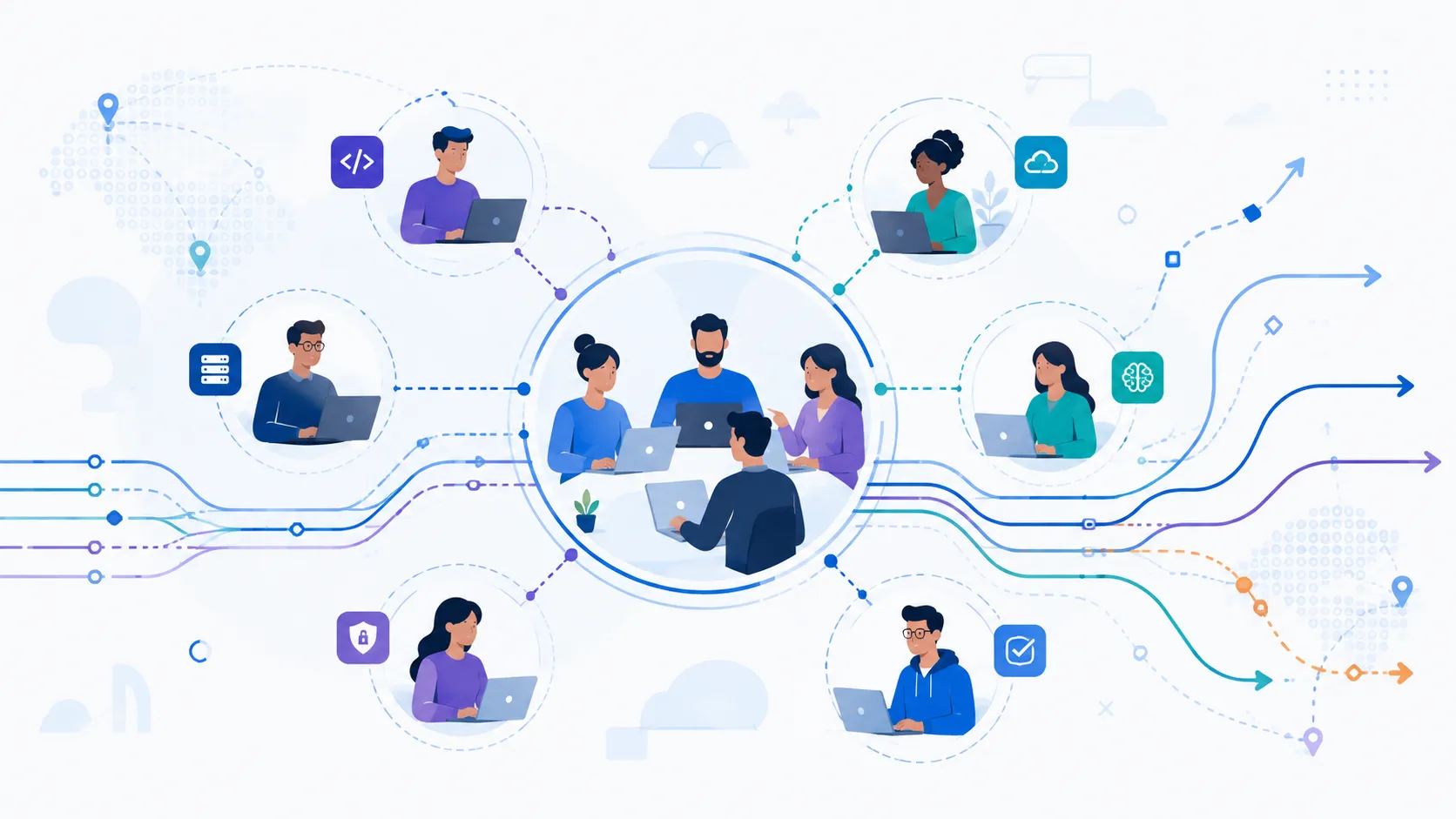
When you hire remote developers, you can search beyond one city or state for specialists in cloud infrastructure, AI, cybersecurity, mobile, data engineering, or QA automation.
The point is not to collect more résumés. It is to stop letting geography make technical decisions for you.
The Real Benefits of Remote Developers: Speed Without the Panic
Stop Hiring by ZIP Code
A remote search lets you evaluate people by technical ability, relevant experience, communication, time-zone overlap, and project fit.
You may not need another generalist. You may need a DevOps engineer who has migrated high-traffic systems to AWS or a React specialist who can stabilize a complex front end before launch.
A remote developer model lets you pursue the right profile instead of settling for the closest available match.
Scale the Skill, Not Just the Headcount
“Hire more people” is not always the answer. Sometimes you need one capability for six months or a small squad before a release.
The benefits of remote developers include shaping capacity around the work. You can strengthen a team during a demanding phase without immediately creating a large permanent structure.
That means matching the hiring model to the business need—and being clear about scope, expectations, and duration.
Your Roadmap Changed. Your Team Should Too.
Software projects rarely need the same skills from beginning to end. Early development may require UX and rapid prototyping. Growth may bring demands for security, performance, data infrastructure, and automation.
With stronger team flexibility, the skills mix can evolve alongside the product. The roadmap does not have to be squeezed around whoever happens to be available internally.
Time Zones Can Be a Relay, Not a Roadblock
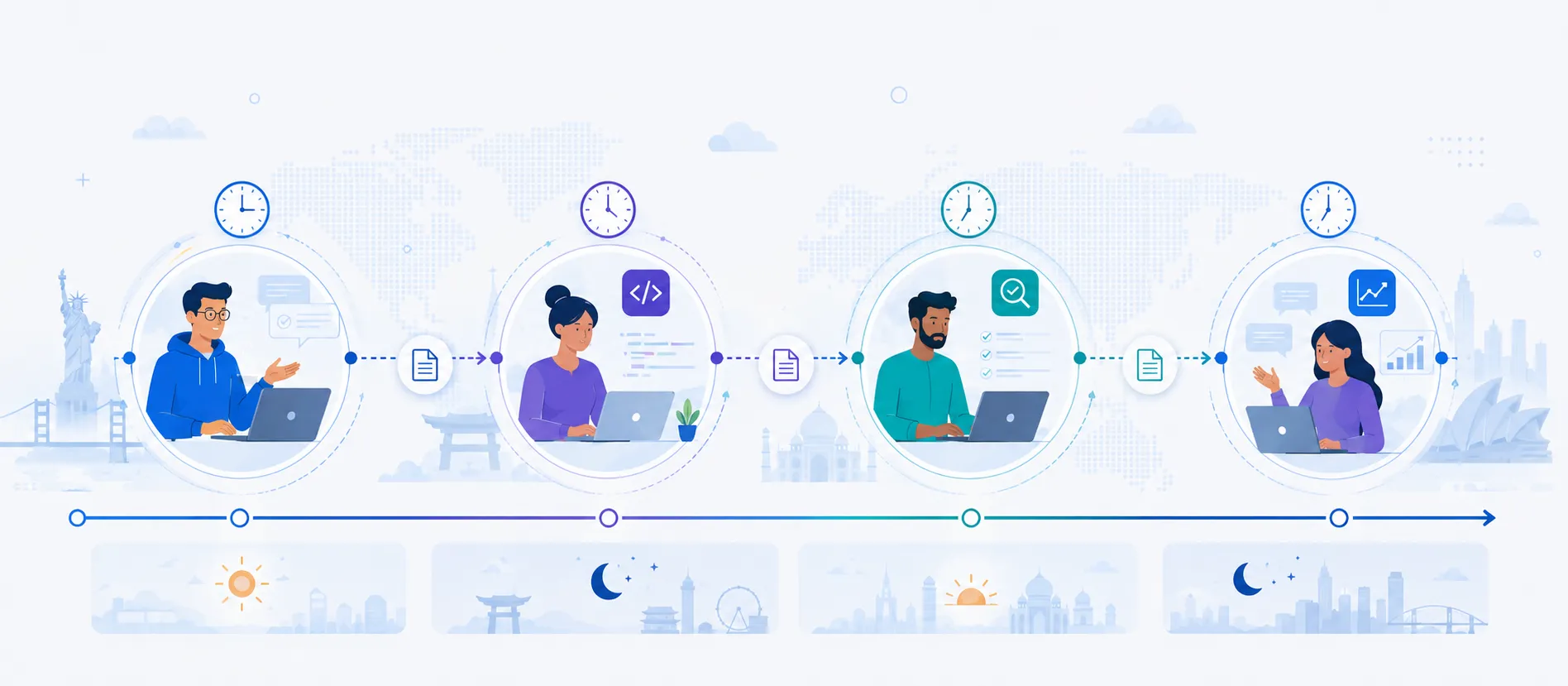
Distributed teams can extend useful working-hour coverage, especially when U.S. companies collaborate with engineers in Latin America or Europe.
But “follow the sun” should not mean someone is always exhausted. The goal is sustainable overlap, documented handoffs, and fewer blocked tasks—not 24/7 meetings.
Used intentionally, time-zone diversity improves coverage. Used carelessly, it creates delays and resentment. The difference is management.
Retention Isn’t “Soft Stuff”
Flexibility can attract experienced engineers who value autonomy and focused work. It can also help retain people whose lives do not fit neatly around a daily commute.
A Stanford randomized study of 1,612 employees found that working from home two days a week reduced quit rates by one-third without harming performance or promotion prospects.
The lesson is simple: thoughtful flexibility can support retention without sacrificing results.
What Does Flexibility Look Like When the Pressure Is Real?
The benefits of remote developers become clearer when connected to everyday business problems:
Flexibility Without Structure Is Just Chaos
Here is the catch: the ability to hire remote developers does not automatically create a high-performing team.
Remote collaboration can expose weak onboarding, vague ownership, poor documentation, and meeting overload. If nobody knows who makes the decision, another Slack channel will not save the project.
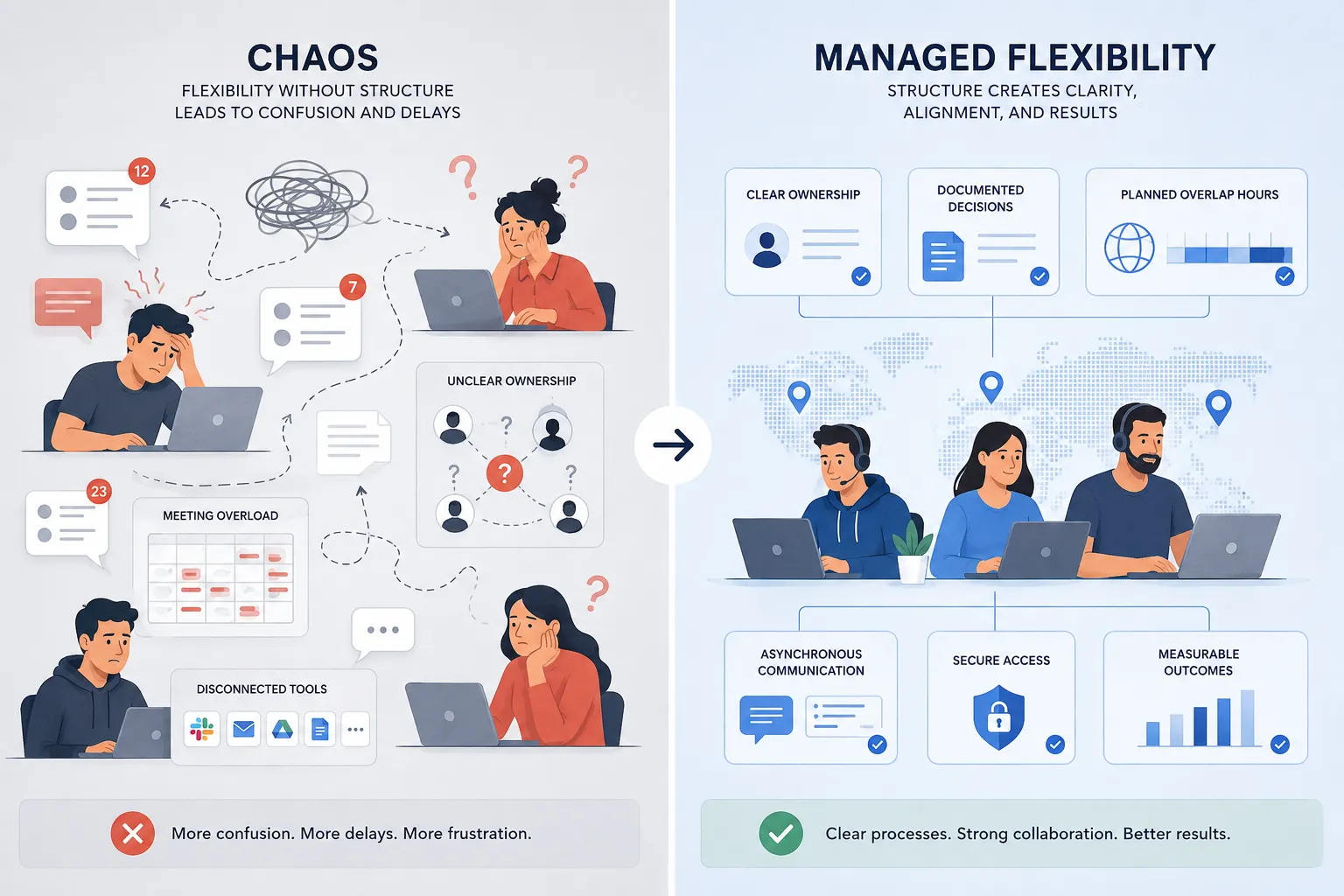
Successful remote teams establish clear ownership, overlap hours, asynchronous communication rules, documented decisions, structured onboarding, secure access, and regular check-ins.
Gallup’s research on the remote-work paradox highlights the balance leaders must manage: remote employees can be highly engaged while still experiencing isolation or lower wellbeing.
Flexibility is not the absence of management. It is the result of better management.
Should You Hire Remote Developers – or Keep Stretching the Same Team?
Consider remote hiring when a critical role has been open too long, a skill is scarce locally, a launch needs extra capacity, or your engineers constantly cover work outside their strengths.
Another warning sign? Your best people spend more time fighting fires than building the product.
Before you hire remote developers, define the technical outcomes, collaboration hours, communication standards, security requirements, and decision-making responsibilities. Vet for real project experience—not keyword-heavy résumés.
Cost matters. But the cheapest rate can become the most expensive choice when poor fit creates rework and missed deadlines.
The better question is not, “How little can we pay?” It is, “How quickly can this person become a trusted contributor?”
The Biggest Remote Developer Benefit Is Optionality
The market will change. Customers will request new features. Technology choices will age. Priorities will collide.
You cannot predict every turn, but you can build a team ready to take it.
A strong remote developer strategy gives your company specialized skills, room to expand capacity, and the team flexibility to respond without breaking the people already carrying the roadmap.
Ready to hire remote developers who fit your technology, budget, and collaboration needs? UnitedCode can help you find vetted engineers and integrate them into your team without making hiring another full-time project.
Prepared and written by Yuliia Romanova, Co-Founder and CEO of UnitedCode, Certified Scrum Product Owner (CSPO), Certified ScrumMaster I & II (CSM), and female entrepreneur.
FAQ
Who is a remote developer?
A remote developer is a software professional who works outside the company’s main office. The person may be an employee, contractor, or dedicated member provided through a staff-augmentation partner.
What are the main benefits of remote developers?
They include broader talent access, specialized expertise, faster capacity expansion, more hiring options, and improved team flexibility as project needs change.
How do remote engineers improve team flexibility?
They let companies add specific skills, strengthen delivery capacity, and support planned time-zone coverage without limiting hiring to one market.
What should a company check before it decides to hire remote developers?
Evaluate technical skills, project experience, communication, time-zone compatibility, security practices, availability, and cultural fit. Define ownership and expected outcomes before onboarding.